Minimizing the Environmental Impact of our Activities and Supporting the Ecological & Energy Transition
Implementation of ISO 14001 and ISO 50001 Standards
BRL Exploitation is certified ISO 14001 (Environmental Management) and ISO 50 001 (Energy Management) across all its activities. This responsible management approach focuses on pollution prevention, reducing water and energy consumption, and waste recovery.
Maintenance and Modernization of Assets
To improve the efficiency of hydraulic infrastructure and reduce environmental impacts, the Group deploys a strategy for maintenance and modernization of its equipment, using new technologies that are more energy-efficient.
Maximizing Water Savings and Responsible Resource Use
Several initiatives have been implemented to promote water savings, such as consumption monitoring tools for production and distribution services, predictive consumption models for different user types, and awareness programs for operators. BRL has long promoted responsible irrigation practices. In this context, BRLE develops multiple information and awareness programs, including the “Weekly Alert,” which helps calculate the water requirements for managed spaces.
Pollution Prevention
Through its Environmental Management System (EMS), BRLE works to reduce and control pollution risks from its activities. Annual environmental assessments identify risks, set objectives, define emergency situations, and determine necessary actions. Regular simulations are also conducted. Waste management is a central focus of the Group’s energy transition efforts. BRLE actively works to reduce waste production by developing sorting and recycling channels across its operational sites.
Greenhouse Gas Emissions Control
None of the BRL Group companies are legally required to produce a greenhouse gas emissions report (GHG Inventory) under Article L229-25 of the French Environmental Code.
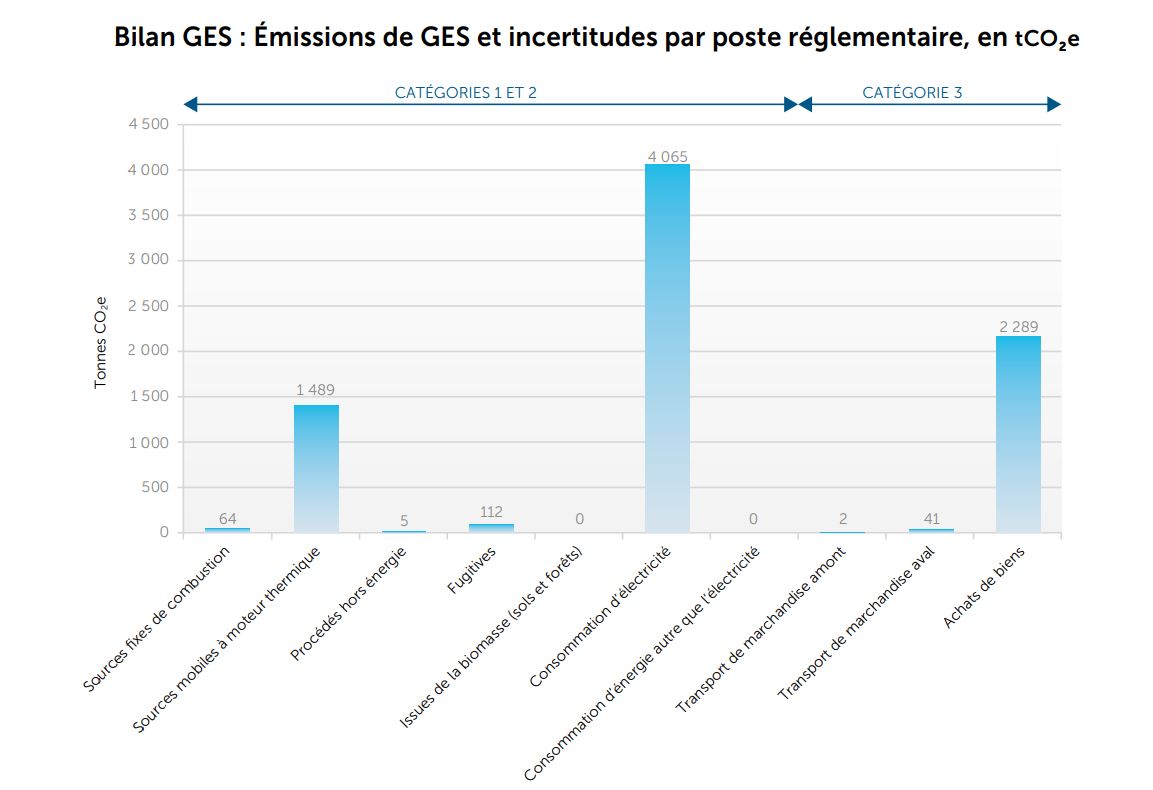
However, in line with its corporate responsibility policy, BRL has voluntarily conducted a full GHG inventory every four years since 2009 and an annual simplified inventory since 2023. The 2024 simplified inventory (based on 2023 data) reports 8,066 tCO2e, a 19.23% increase compared to the 2023 inventory (6,765 tCO2e, based on simplified inventory categories), mainly due to higher electricity consumption.
For BRL, BRLI, and BRLEN, overall electricity consumption decreased compared to 2022, but an increase in the emission factor of the energy mix between 2022 and 2023 caused a slight rise in emissions.
For BRLE, electricity consumption decreased at headquarters, but significantly increased at agencies and hydraulic facilities. The 2023 drought led to higher pumping demands to transfer water from the Rhône to affected areas. Pumping, which consumes substantial energy, accounted for approximately 92% of BRLE’s electricity use in 2023. Combined with the increased emission factor, this resulted in a rise of nearly 900 tCO2e for this emission source.
The Group updates an annual transition plan summarizing all actions taken to reduce GHG emissions.
GHG Inventory: Greenhouse gas emissions and uncertainties by regulatory category, in tCO2e (French)
Since 2020, the Group has developed a Mobility Plan (PDM) to promote more sustainable and responsible transportation. Various initiatives include encouraging cycling, redesigning bike parking at headquarters, and offering bike kits to employees.
2030 Goals
Reduce vehicle fleet fuel-related GHG emissions by 20%.
Reduce air travel-related GHG emissions by 10%.
Select renewable energy sources to become a positive energy group.
To achieve its goal of becoming a Positive Energy Group by 2030, BRL has launched a master plan to promote renewable energy across its concession assets and supports the Occitanie Region in its REPOS 2050 project to become a positive energy region.
Respect and Preservation of Biodiversity and Natural Environments
Committed to protecting biodiversity and natural habitats, BRL integrates environmental considerations from the design stage of investment projects. In compliance with Article L.122 of the French Environmental Code, impact studies ensure that measures are taken to avoid, reduce, or, if necessary, compensate for harmful environmental consequences. This is achieved through close collaboration between BRL as project owner, BRLI as project manager, and the regional environmental authority (DREAL).